What We Do

Services

Here's the full rundown of deck projects we take on, from first-time builds to structural repair work.

HomeServices

Everything we take on

Every job below is one we do ourselves across Palm Harbor.

Deck Installation

We build decks from pressure-treated pine or composite boards like Trex and TimberTech, framed with joists set 16 inches on center. Footings go below grade with poured concrete piers sized for Pinellas County's sandy soil and wind load requirements. Every ledger board gets bolted and flashed to the house, not just nailed, so water can't work its way behind the siding.

Deck Repair

Soft spots in the decking, wobbly railings and sagging joists usually mean rot has already set in, not that a board needs a quick swap. We pull up boards to check the joists and ledger underneath before we patch anything on top. If the framing's compromised we replace it, because new decking on rotten joists just hides the problem for another year.

Deck Staining & Sealing

Florida sun bleaches wood fast and afternoon storms drive moisture into open grain, so we recommend sealing every 12 to 18 months on pressure-treated decks. We pressure wash first, let the wood dry for at least 48 hours, then apply a penetrating stain rated for high UV exposure. Composite decking doesn't need sealing, just a wash down twice a year.

Custom Deck Design

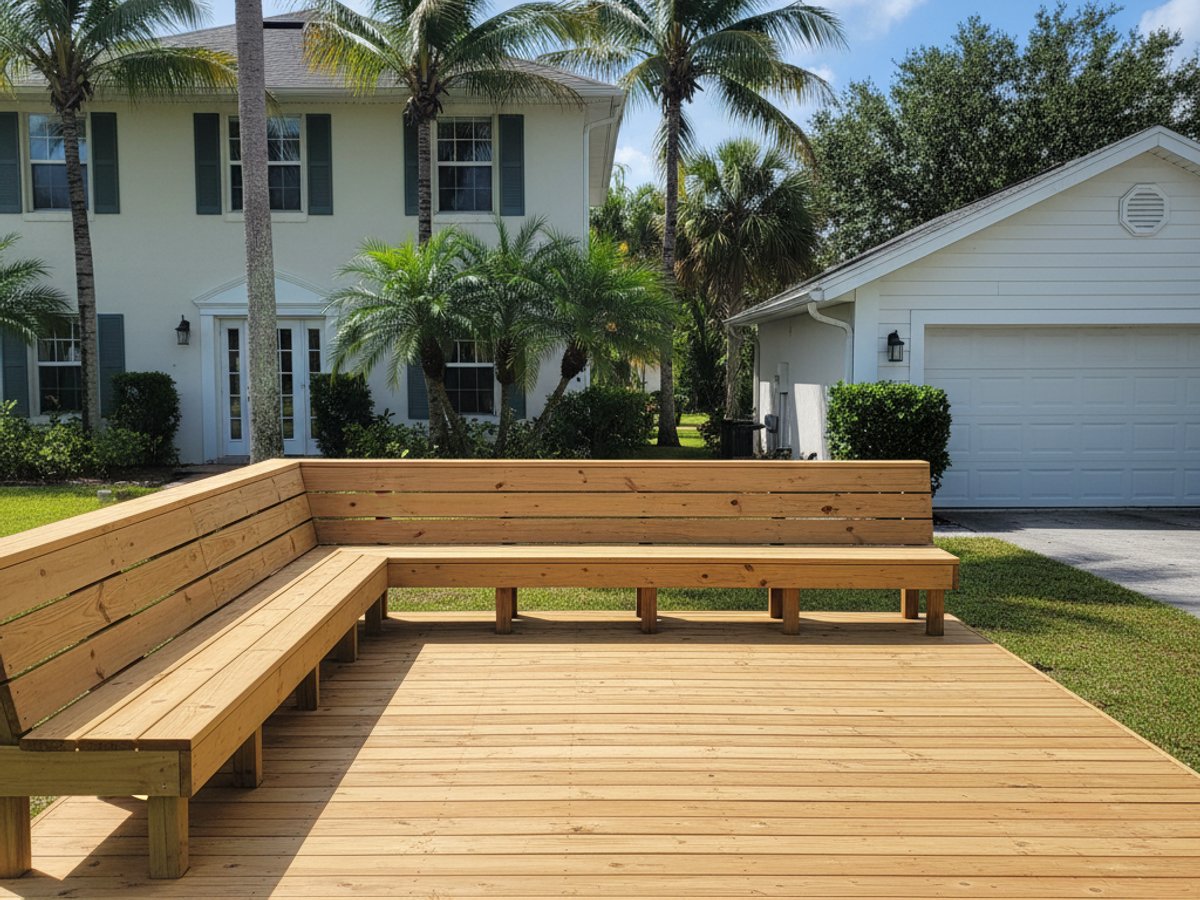
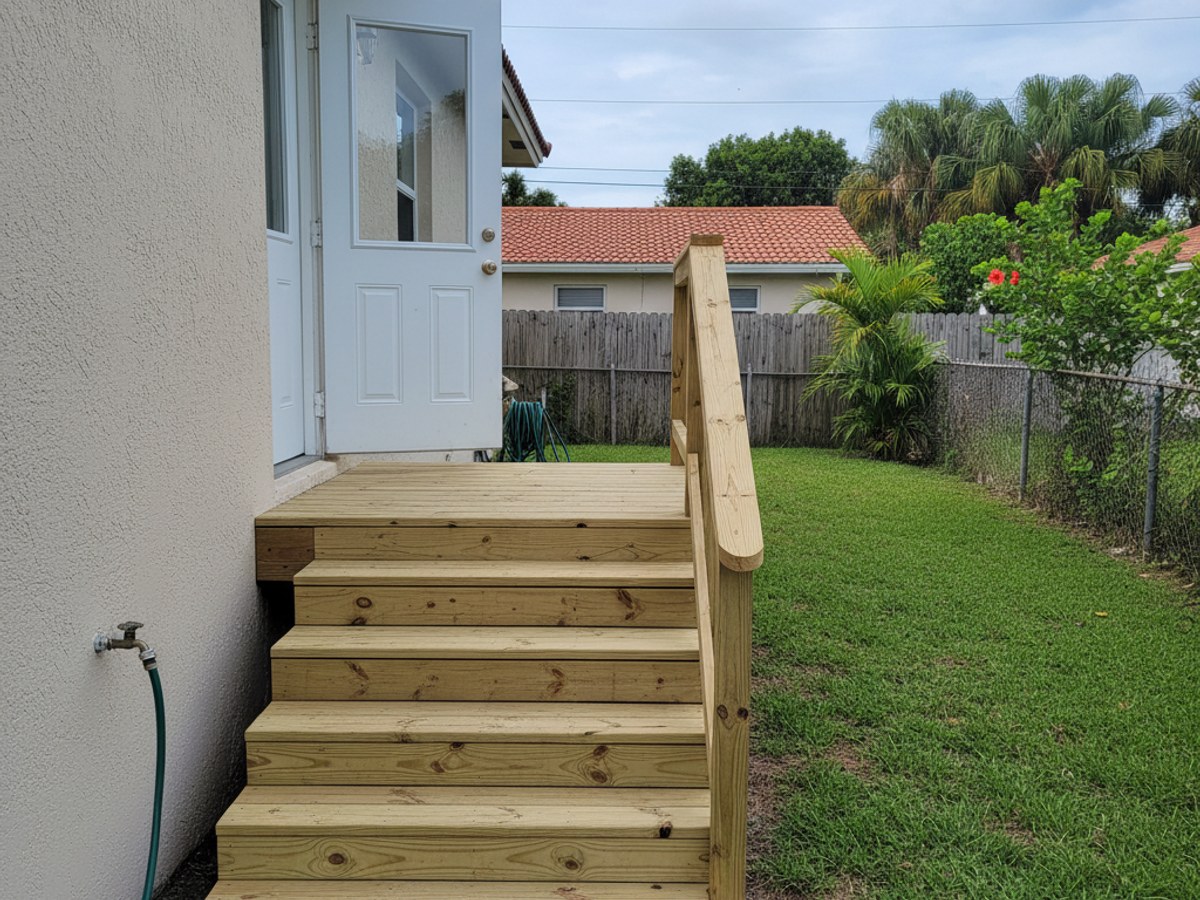
Multi-level decks, built-in benches, pergolas, stairs that wrap around a pool cage, we work out the layout with you before any lumber gets ordered. We draw it to scale so you know exactly how much shade, seating and square footage you're getting. Florida building code sets the rules on railing height and stair rise, and we design inside those limits from the start.

Composite Decking Installation

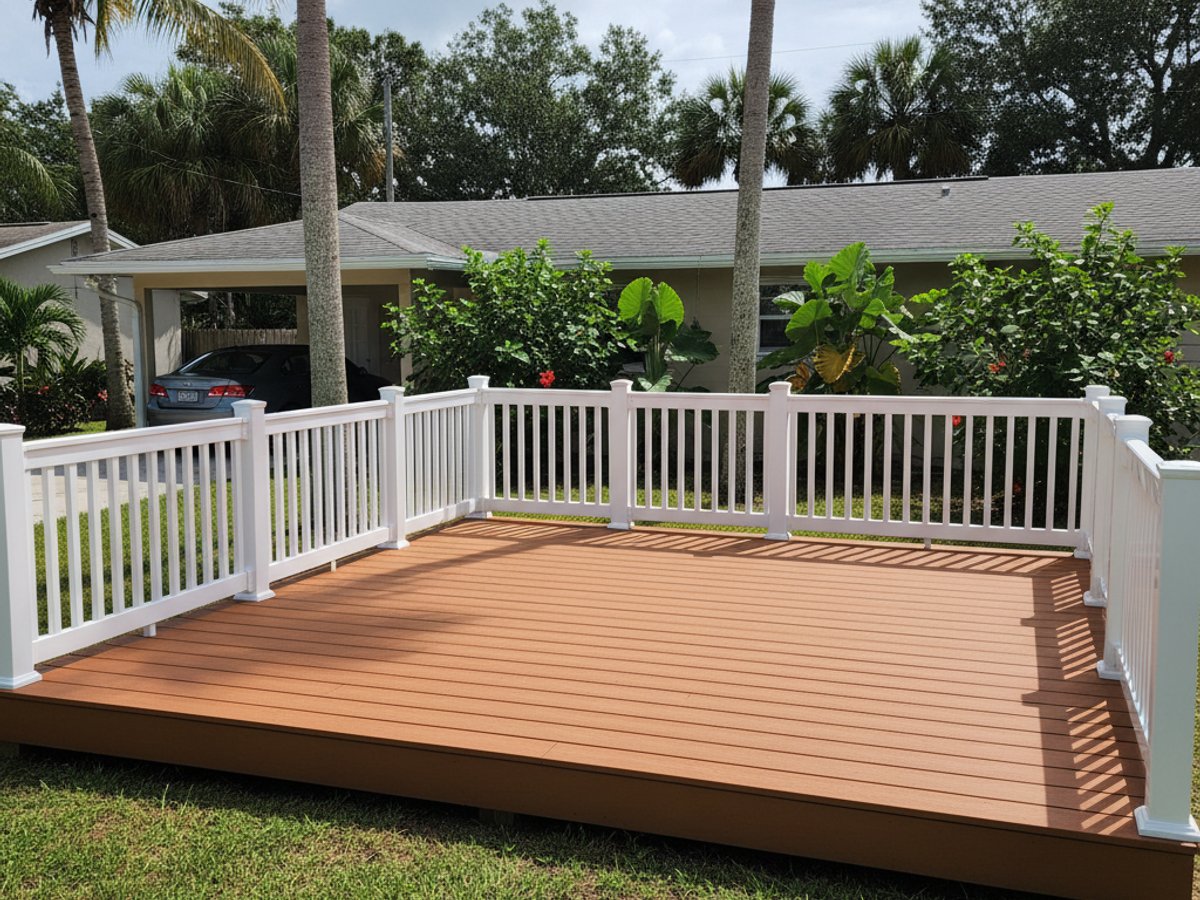
Composite boards cost more up front than pressure-treated pine, but they don't split, splinter or need refinishing. We leave the manufacturer's expansion gap between boards since composite moves more than wood does in Florida heat. Hidden fastener systems keep the surface clean, no screw heads to catch bare feet.

Deck Replacement

When the joists are shot, the ledger board's rotted out, or the whole structure's been patched too many times, tearing it down and starting over costs less than chasing repairs. We reuse footings where they're still sound and rebuild the frame to current code, including hurricane straps most old decks never had.

Deck Railing Repair

Loose posts and wobbly railings are almost always a sign the fasteners have corroded, not that the wood is bad. We rebuild post connections with stainless or hot-dip galvanized hardware that holds up against salt air, and we check baluster spacing against the 4-inch code gap while we're at it.

Pool Deck Construction

Pool decks need boards spaced to shed water fast and hardware that won't rust from chlorine splash. We build the frame to keep the deck surface a step below the door threshold so rain runs away from the house, not toward it.

Screened Deck Enclosures

A screened enclosure over a deck keeps the no-see-ums out without losing the outdoor feel. We frame it to tie into the existing roofline or build a standalone structure, and we run it past code for wind rating before it goes up.

Deck Framing & Structural Repair

This is the part nobody sees once the boards go down, and it's the part that decides whether the deck is still standing in ten years. We check joist hangers, beam sizing and post-to-footing connections, and we fix undersized framing even if it means more work than the customer expected to pay for.

How It Works

Four steps, and no surprises in any of them.

01

We come and look

You tell us what you want doing, we look at what is actually there, and we ask the awkward questions early.

02

You get a price

In writing, itemised, free. If something might add cost later we flag it now rather than at the end.

03

We do the work

Same crew throughout. We cover your floors, keep the dust down and tidy up before we leave each day.

04

We walk it with you

You point out anything you are not happy with and we fix it before the invoice, not after.

Where We Work

All of this, across Palm Harbor, FL

Deck installation and repair work covers Palm Harbor and the surrounding Pinellas County area.

Palm Harbor, FL
Tampa, FL
St. Petersburg, FL
Clearwater, FL
Largo, FL
Pinellas Park, FL
Land O' Lakes, FL
Tarpon Springs, FL
Dunedin, FL
Safety Harbor, FL
New Port Richey, FL
Oldsmar, FL
Common Questions

Things worth asking

Questions that come up once a deck project is actually underway.

Do I need a permit to build a deck in Pinellas County?
Most decks attached to a house or built more than 30 inches off the ground require a permit in Pinellas County, along with an inspection of the footings and framing before decking goes on. Smaller ground-level or freestanding decks sometimes fall under exceptions, but that depends on the specific site and local code interpretation.
How long does it take to build a deck?
A standard single-level deck usually takes one to two weeks from framing to finished decking, depending on size and weather delays. Multi-level decks with stairs, built-in seating or a screened enclosure can take three to four weeks.
Can a deck be built to fit a specific budget?
Deck size, footprint and material choice can all be adjusted to fit a target budget, and pressure-treated pine costs significantly less than composite decking per square foot. Simplifying railing style or reducing the footprint are common ways to bring a design in under budget without cutting corners on the framing.
What kind of guarantee comes with deck work?
Workmanship on framing and construction is typically covered under a written warranty period from the contractor, separate from manufacturer warranties on decking materials like composite boards, which often carry 25-year fade and stain warranties. Details of what's covered should be spelled out in the contract before work starts.
Who handles questions once a deck project is underway?
A deck project typically has one point of contact who handles scheduling, material questions and any changes that come up mid-build, rather than switching between different people. That contact should be reachable by phone throughout the project, not just at the estimate stage.
What materials are used for deck framing and decking boards?
Framing is typically pressure-treated pine sized for the span and load, with joists set 16 inches on center and footings poured to local code depth. Decking boards can be pressure-treated pine, cedar, or composite brands like Trex and TimberTech depending on maintenance preference and budget.
Can the yard still be used while a deck is being built?
Yard access is usually limited near the immediate work area for safety, especially during footing excavation and framing, but the rest of the property typically stays usable. Pets and kids should stay clear of the site while concrete footings cure and lumber is being cut.
How should a yard be prepared before deck construction starts?
Clearing furniture, potted plants and anything breakable away from the work area helps a crew move materials without delay. Marking the location of any sprinkler lines or buried cables ahead of time also prevents damage during footing excavation.
What happens if rot or structural problems turn up once the old deck is torn out?
Hidden rot in ledger boards, joists or posts sometimes only shows up once old decking is removed, and that gets flagged before any new construction continues. Additional framing repair adds cost, but building over compromised wood just hides a problem that will resurface within a year or two.
How should a new deck be maintained after it's built?
Pressure-treated wood decks need resealing every 12 to 18 months in Florida's sun and rain to prevent graying and cracking, while composite decking just needs periodic washing. Keeping planters and furniture from trapping moisture against the boards also extends the life of either material.

Not sure what you need?

Describe the problem and we will tell you what it probably is. No obligation.
Call (727) 607-7511