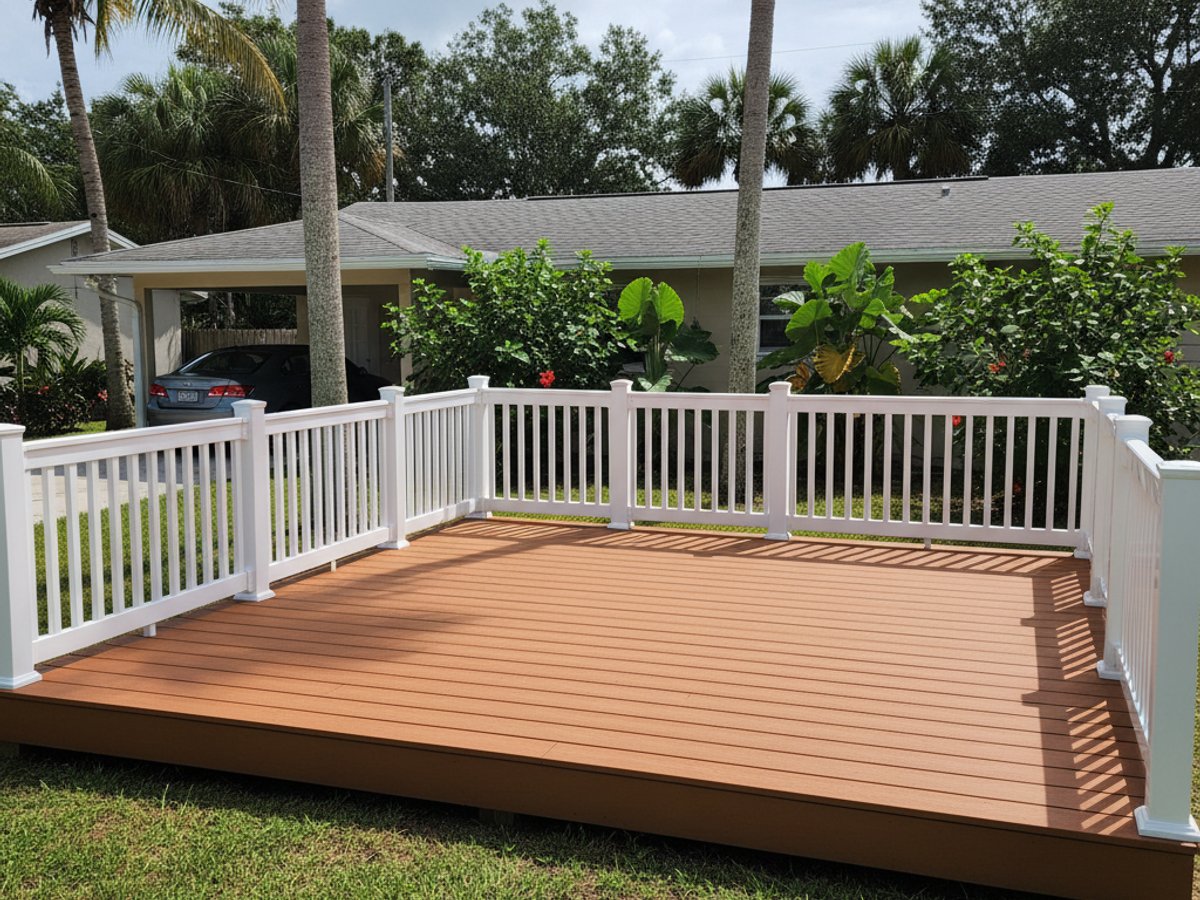
Anybody with a nail gun and a truck can call themselves a deck builder. Palm Harbor has plenty of them, some good, some who'll be gone by the time your ledger board starts rotting off the house. Here's what actually separates the two, and what it has to do with the ground you're standing on.
Start with the soil, because it decides how the whole structure gets held up. Most lots in Palm Harbor sit on sandy soil that drains fast, which sounds like a good thing until you're near Sutherland Bayou or one of the canal streets where the water table is close enough to the surface that footings need real depth to bear weight consistently, not just look deep enough on the invoice. Florida Building Code sets minimum footing depths for a reason, and a builder who pours a 12-inch sonotube on sand that's saturated half the year is setting you up for a deck that racks and squeaks within three summers.
Ask about wind, not just wood
Pinellas County isn't inland Georgia. Hurricane season runs June through November, and the wind load requirements in the Florida Building Code apply to decks, not just roofs. A deck attached to your house needs hardware rated for uplift, not just a few 16d nails toenailed into the rim joist. Ask what connector hardware they're using at the ledger and at the post bases. If the answer is vague, that's your answer. A builder who knows the trade will talk about joist hangers, hurricane ties, and through-bolting the ledger to the house framing, not just gluing wood together and hoping.
Humidity does its own damage separately from wind. Standard zinc-coated screws corrode fast in this climate, sometimes within a couple of years, leaving rust streaks down the boards and weak spots at every fastener. Stainless steel or hot-dip galvanized hardware costs more up front and is the only thing that makes sense on a structure that's outside in Florida air 365 days a year.
What the permit process actually tells you
Most residential decks in unincorporated Palm Harbor go through Pinellas County Building Services for permitting, and a deck attached to the house or over a certain height almost always needs one, along with an inspection before the decking boards go down and another at final. If a builder tells you a permit isn't necessary for your project, ask them to show you that in writing from the county, not just take their word for it. Skipping the permit doesn't just risk a fine. It means nobody with code knowledge ever looked at your footings or your ledger attachment before it got covered up. Pool decks and screened enclosures often need separate review too, since the aluminum framing on a screen cage has its own wind rating requirements.
A survey or setback check matters more than people expect. A lot of Palm Harbor's older streets, especially around Ozona and the original Palm Harbor waterfront, were platted decades before today's setback rules, and additions built since then have sometimes crept closer to the property line than owners realize. A builder who pulls the survey before designing your deck is protecting you from a stop-work order six weeks in.
Reading the neighborhood you're building in
Houses built in the 1960s and 70s around the older parts of Palm Harbor often have decks or additions from a prior owner that were never permitted, with framing that doesn't match anything you'd approve today. If you're replacing or expanding one of these, expect the contractor to find surprises once the old boards come off, things like undersized joists or a ledger that was never flashed and has been feeding water into the house rim joist for years. That's not a builder trying to upsell you. That's just what's back there.
Newer subdivisions built from the 1980s onward, around Lansbrook or Eastlake Woodlands for example, tend to have more consistent framing and fewer surprises, but they're also more likely to sit inside an HOA with its own design review. HOAs in this area commonly require approval on deck height, railing style, and sometimes even stain color before construction starts. A builder who's worked in your specific community before will know that timeline and won't be caught off guard by it.
Materials, and being honest about upkeep
Pressure-treated pine is still the cheapest way to frame a deck here, and it holds up fine as structure, but as a surface board in direct Florida sun it wants staining or sealing roughly every 1 to 2 years, sometimes sooner on a south-facing deck that takes full sun most of the day. Composite and PVC decking cost more upfront, sometimes close to double the material cost of pine, but they don't need that recurring coat and they don't check and splinter the way pine does after a few humid summers. Neither is the automatically right answer. A builder who pushes you toward the expensive option without asking how you actually use the space, or the cheap option without mentioning the maintenance, isn't giving you the full picture.
What to walk away from
- No license number offered without you asking twice.
- A quote with no mention of a permit, on a deck attached to the house.
- Standard exterior screws instead of stainless or hot-dip galvanized hardware.
- Footings described only as "deep enough," with no number attached.
- Pressure to sign same-day with a price that expires tomorrow.
None of this is complicated once you know what questions to ask. Most of it comes down to whether the builder is thinking about what's happening under the boards ten years from now, or just getting the job closed this week. If you want to talk through what a project on your specific lot would actually require, footings, framing, material, permit and all, that's the kind of conversation Omega Deck Solutions has with people before any wood gets cut.